Blue Diffusion
Details9
- No.
- 0373
- Date
- 28 Sep 2026
- Type
- Exhibition
- Place
- M. Rosetta Hunter Gallery, Seattle Central College, Seattle (US)
- Group show
- The Blue Light is a Promise
- Thanks
- Meghan Thréinfhir, who curated the exhibition; M. Rosetta Hunter Gallery, Seattle Central College
- Photo
- Steven Miller
- Resembles
- 0376 Sydhavn Never Surrenders
- Read as
- GREY 86%, MID, EVEN, DETAILED
- Links
- oerum.org
A diffusion model trained on photographs of every blue object in my flat, running in a web browser on whatever device will still open one.
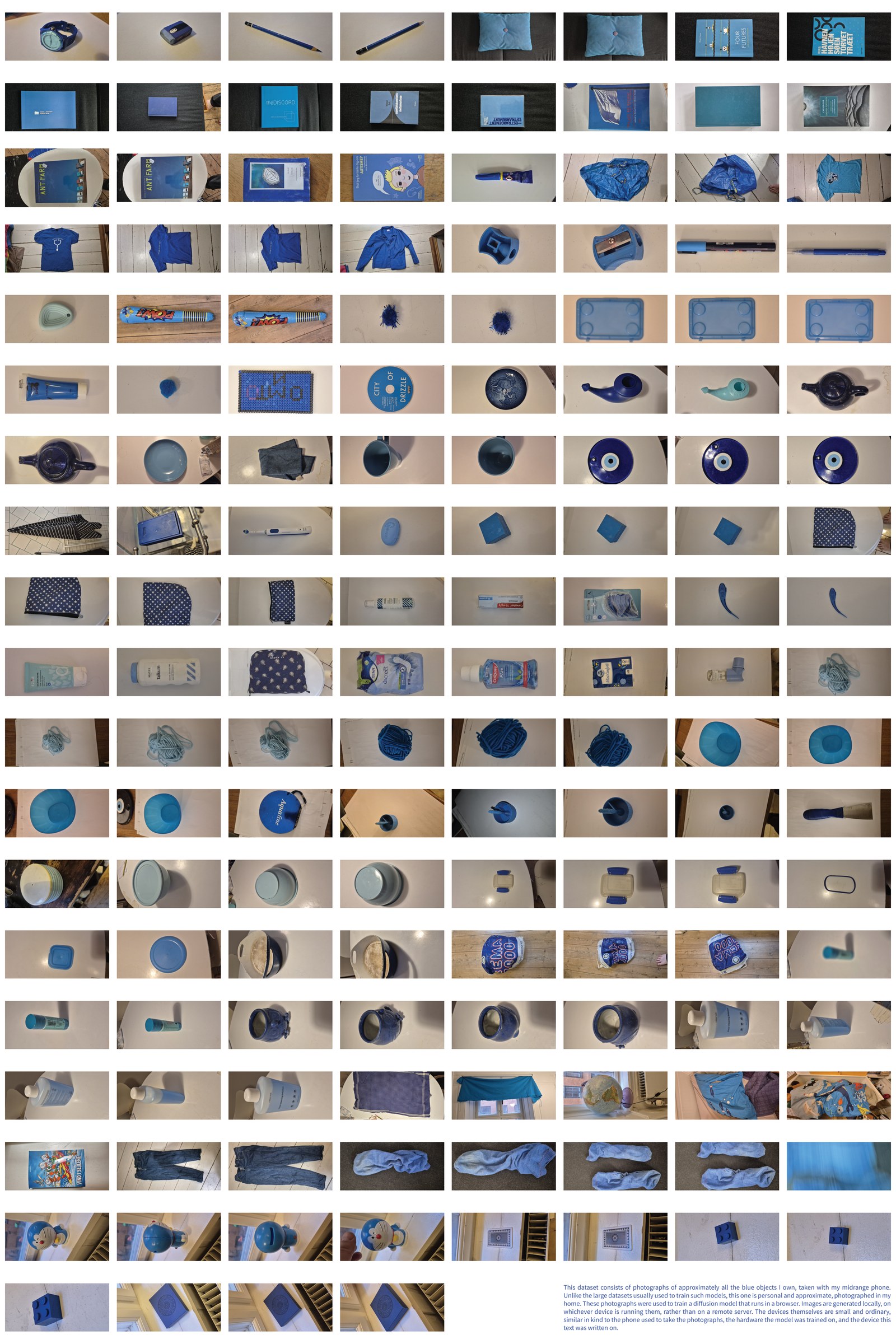
In March 2026 I photographed more or less all the blue things I own, books, clothes, kitchen things, toys, a neti pot, a pair of jeans, on the floorboards and the kitchen table, with the phone I already had. 183 photographs. What counts as blue was decided by looking and not by measuring: how much of a thing has to be blue, and where blue stops and green begins. Those are soft decisions, and training a model on the result makes them hard. What the model learned is not blue objects. It learned one person's idea of blue, in one flat in Copenhagen, in one month.
How it was made
The dataset is those 183 photographs, and it was not cleaned. The camera grain stays. So does the yellow cast of the walls, the uneven window light, and in a few frames the shadow of the person taking the picture. Several of the objects are transparent, so the room shows through them.
The model is small, and small on purpose. A U-Net with three encoder stages, a 512-channel bottleneck and skip connections; 200 diffusion steps on a cosine schedule; a thousand epochs at 128 × 128 pixels. Three hours on one graphics card in my studio, powered at the time largely by wind. 128 pixels is big enough to hold a texture and small enough that the generating stays visible and slow, and the whole thing is simple enough that I can follow a decision through it and see where it fails.
That is the opposite of how I usually work. Large open-weight models such as Qwen and Flux give me capability and no access: I cannot see what they were trained on and I cannot read the whole of what they do. This one gives much less and lets me understand all of it.
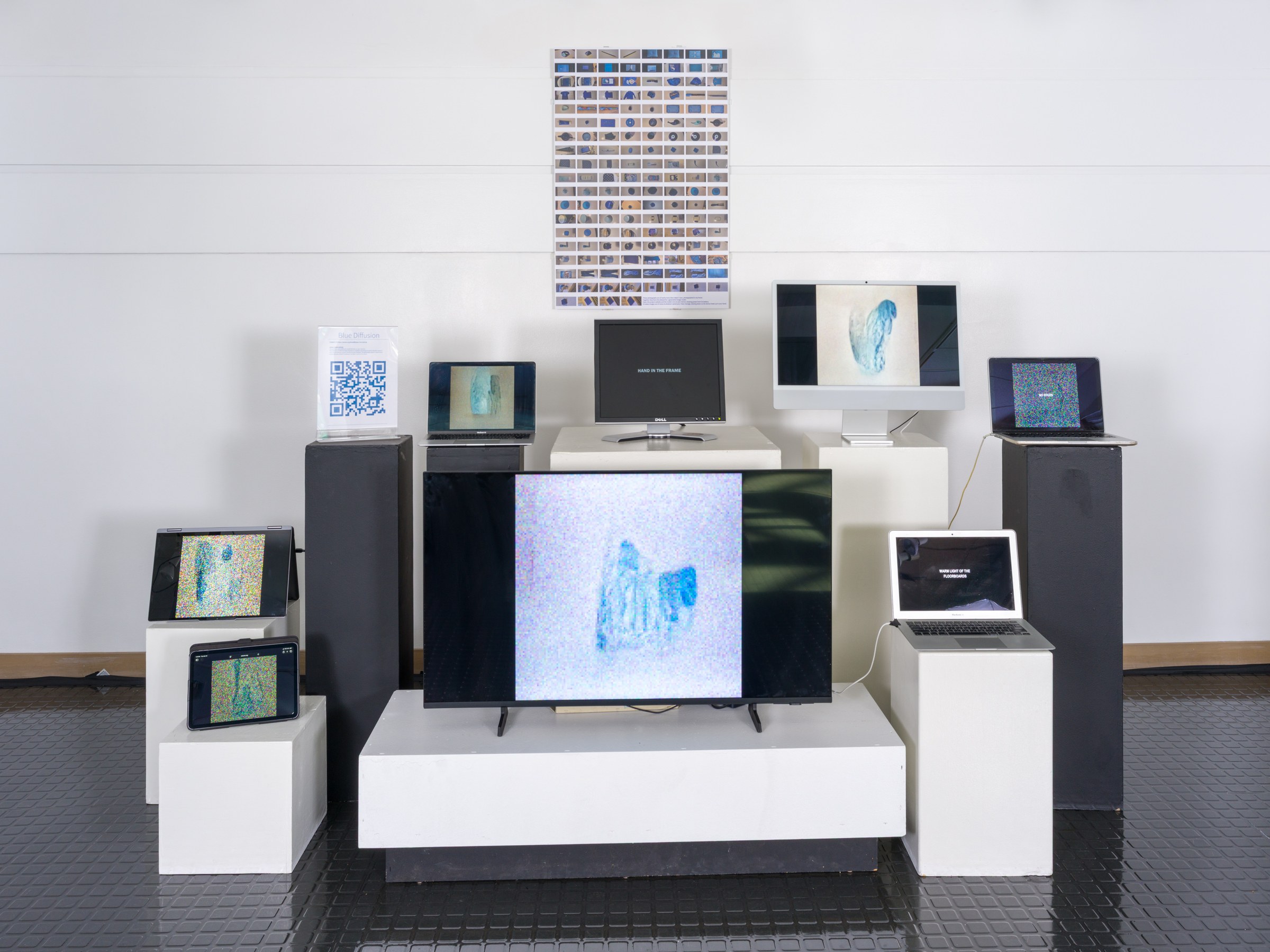
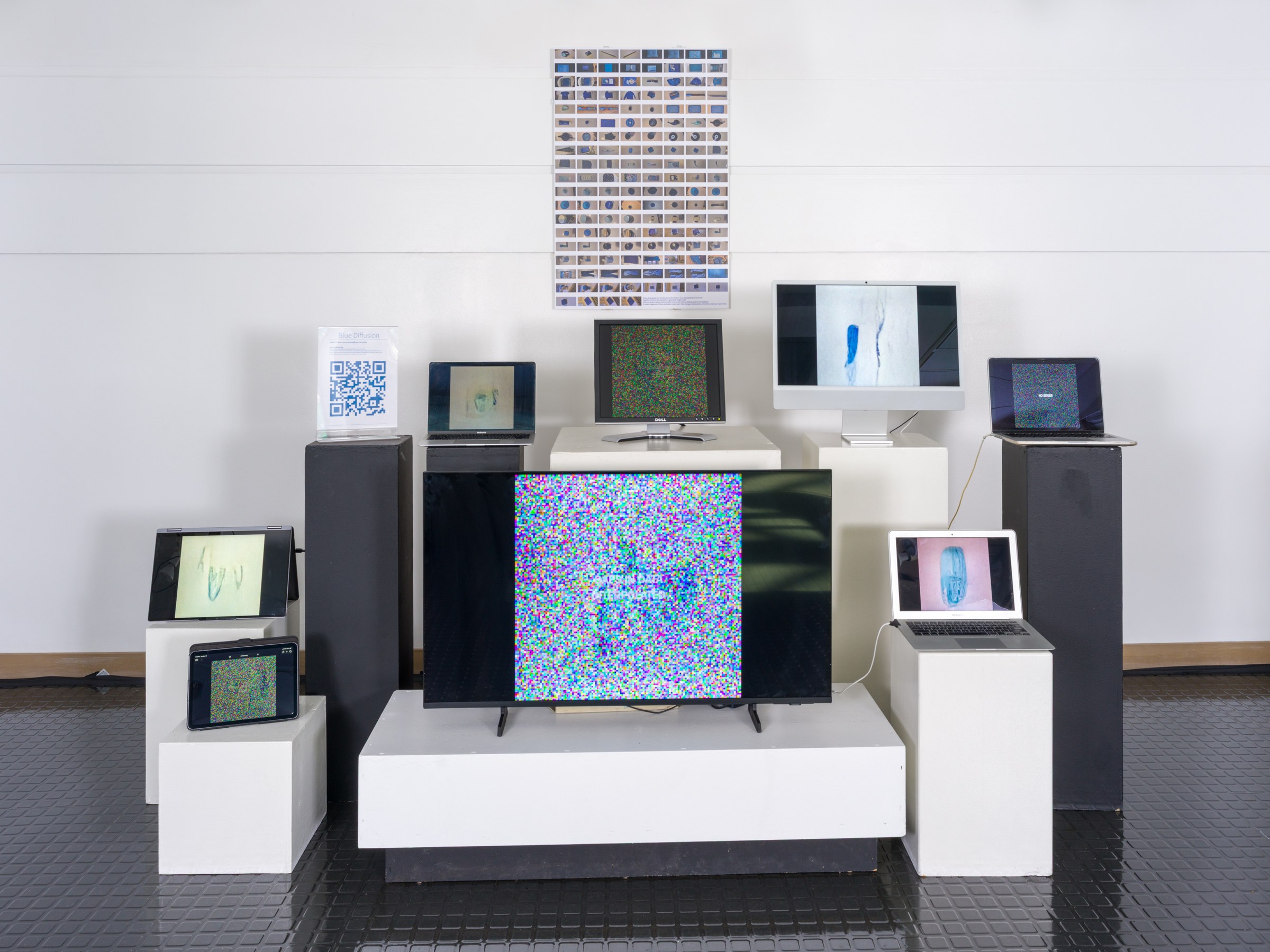
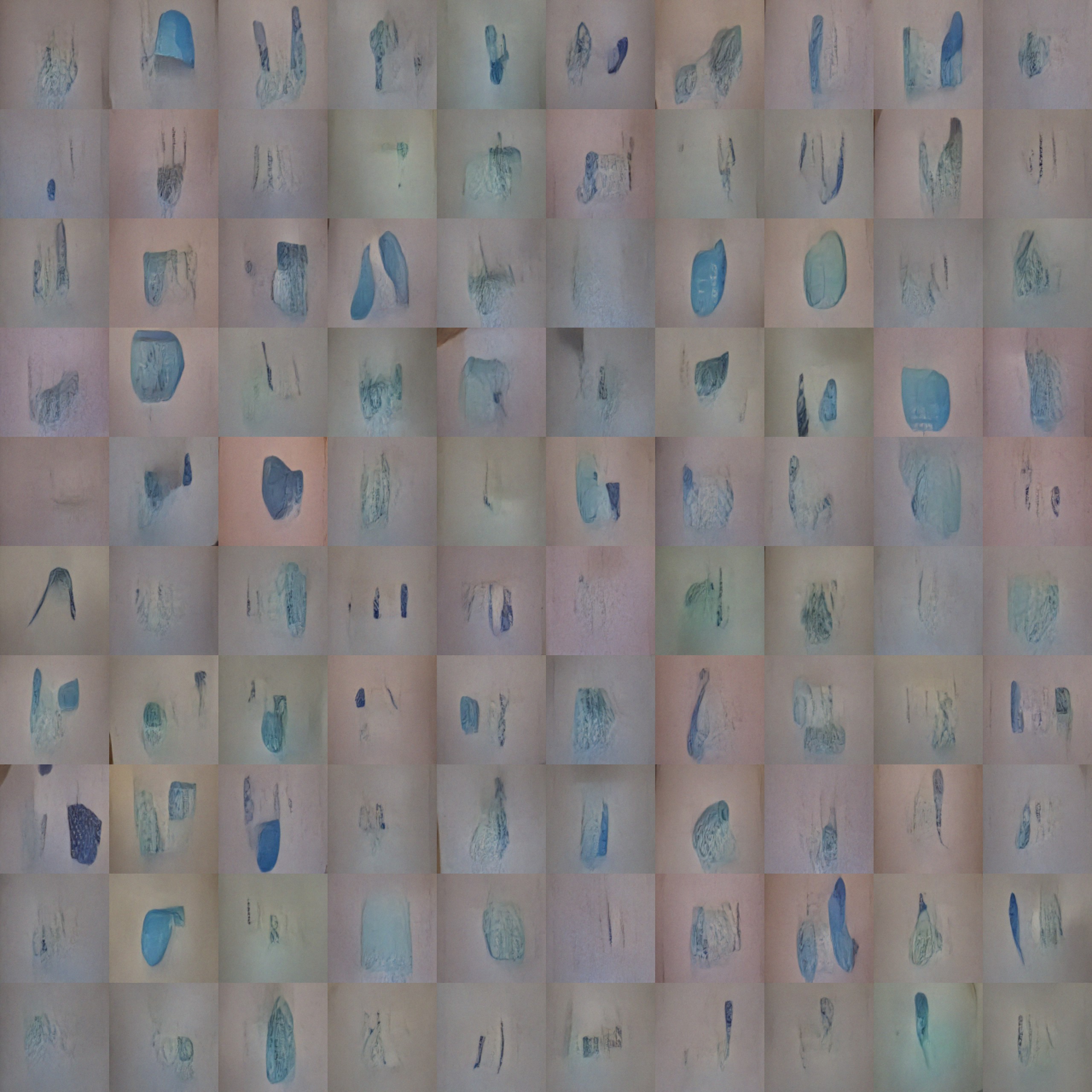
With 183 images the model overfits, and I let it. It does not learn objects. It learns weather. The outputs share a palette, a light and a grain without sharing a subject: blue forms on the warm pink of a tabletop, claw marks, crystals, something that might be fabric or glass or skin. The backgrounds leak in. From the transparent objects the model has learned that surfaces are permeable and that colour is shared between a thing and the room it sits in. In machine learning that is a fault, fixed with more data and heavier augmentation. Here it is the work. A bigger dataset would have smoothed exactly the part worth keeping.
It runs in the browser, on the viewer's own hardware. The model was converted to TensorFlow.js, so each device generates its images itself rather than fetching them from a server. Nothing is installed and no internet is needed: in the gallery a Raspberry Pi raises its own Wi-Fi network and serves a single page to everything connected to it. Connect, open the address, and the device starts generating.
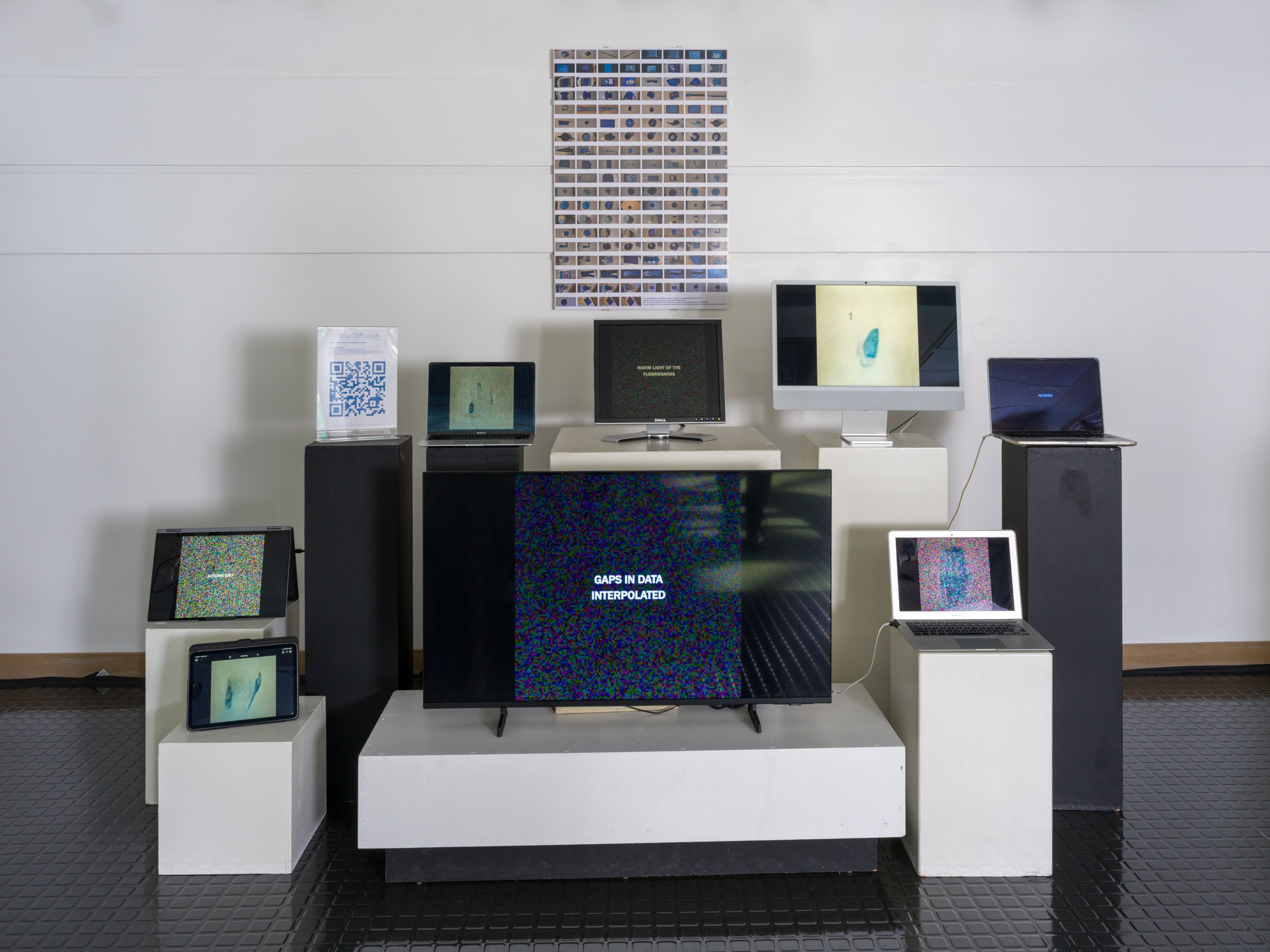
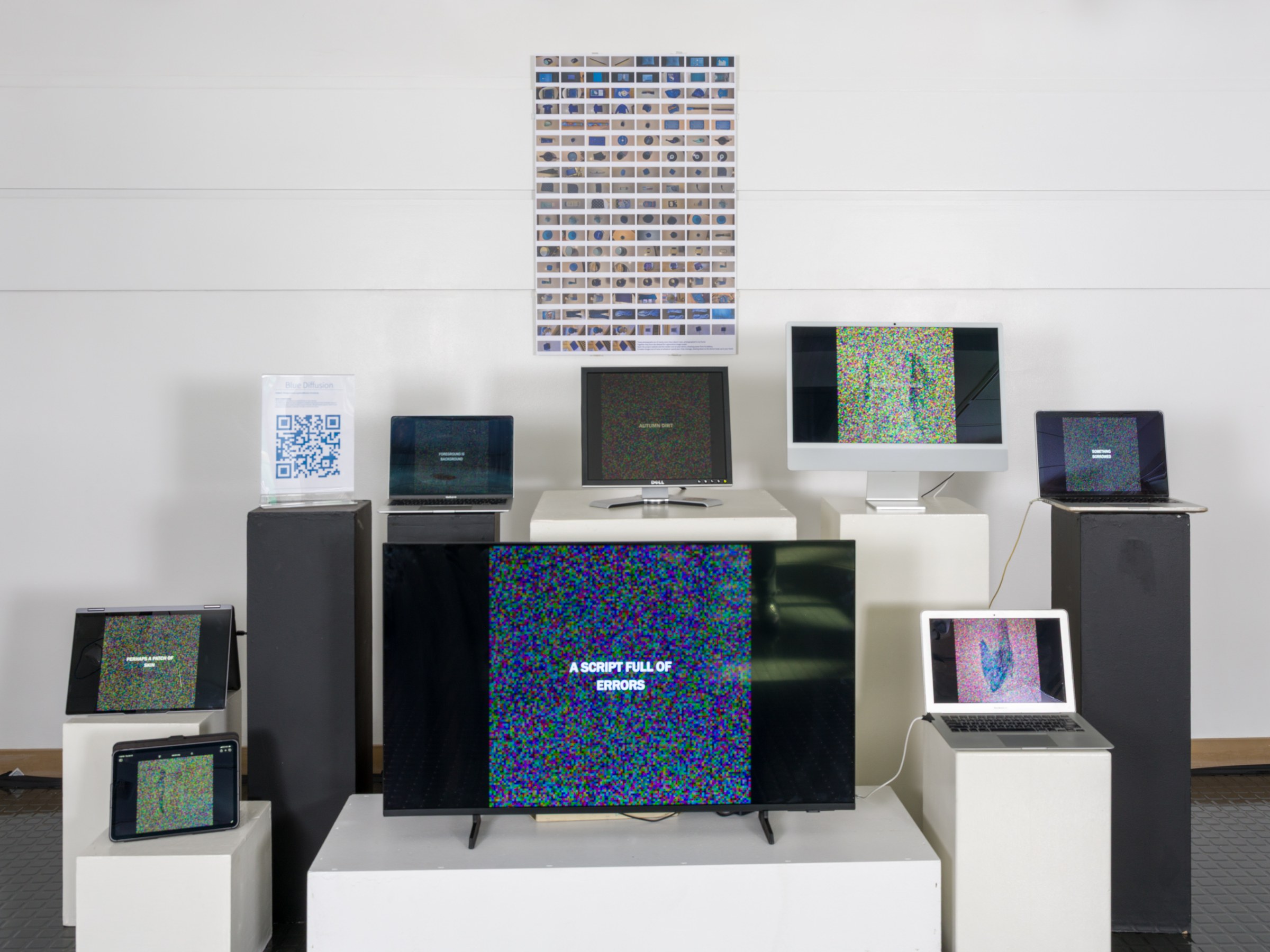
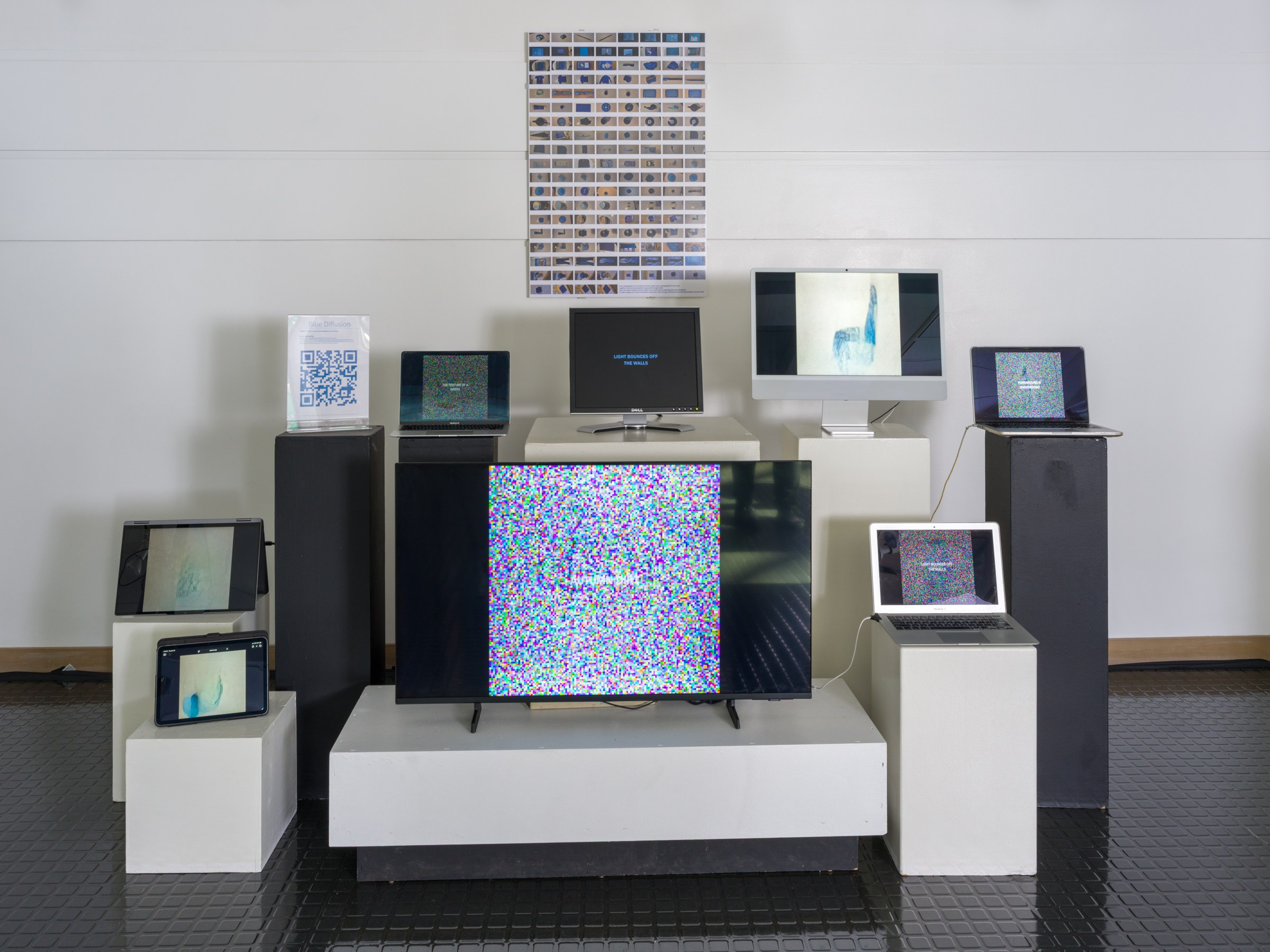
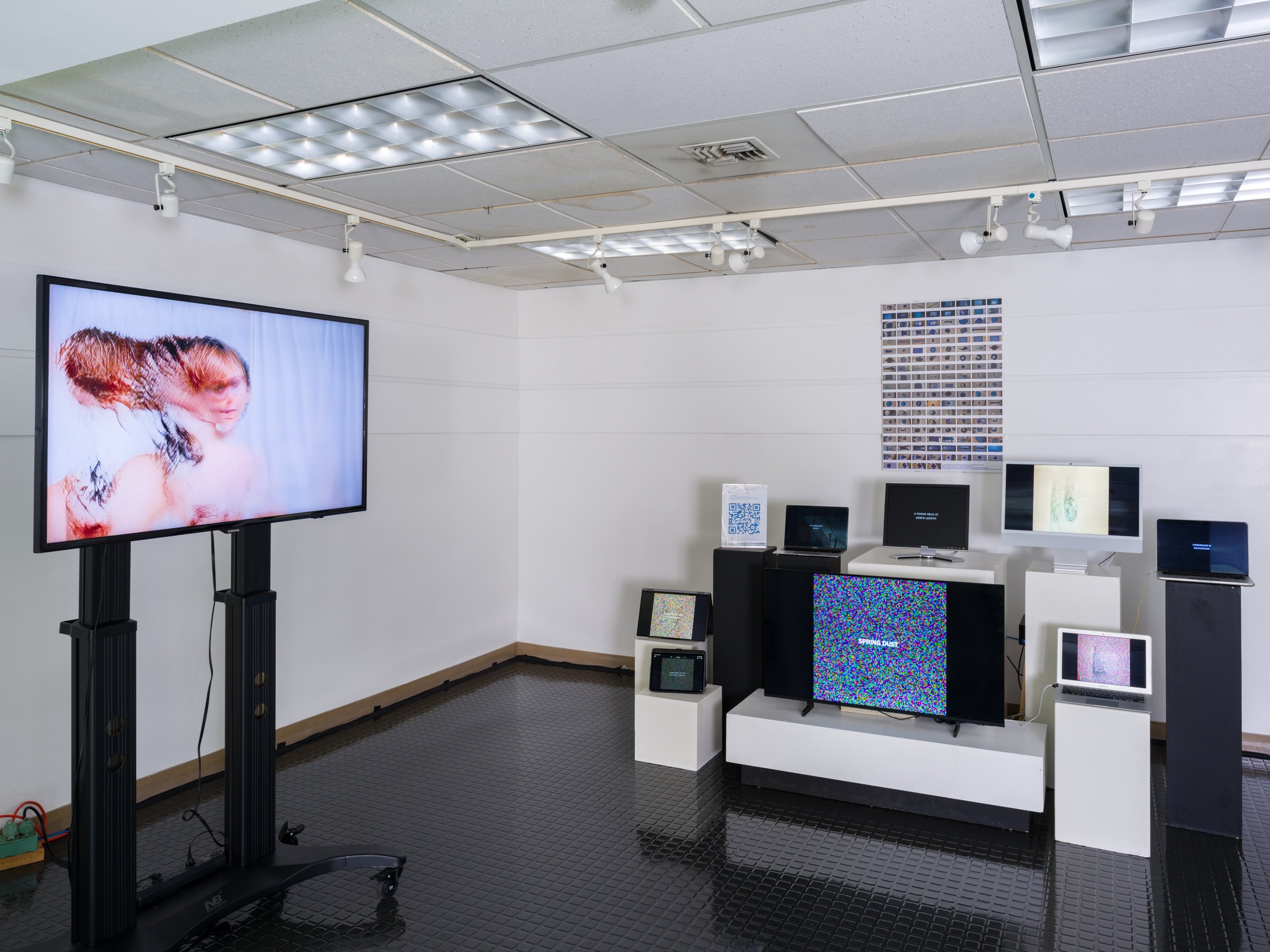
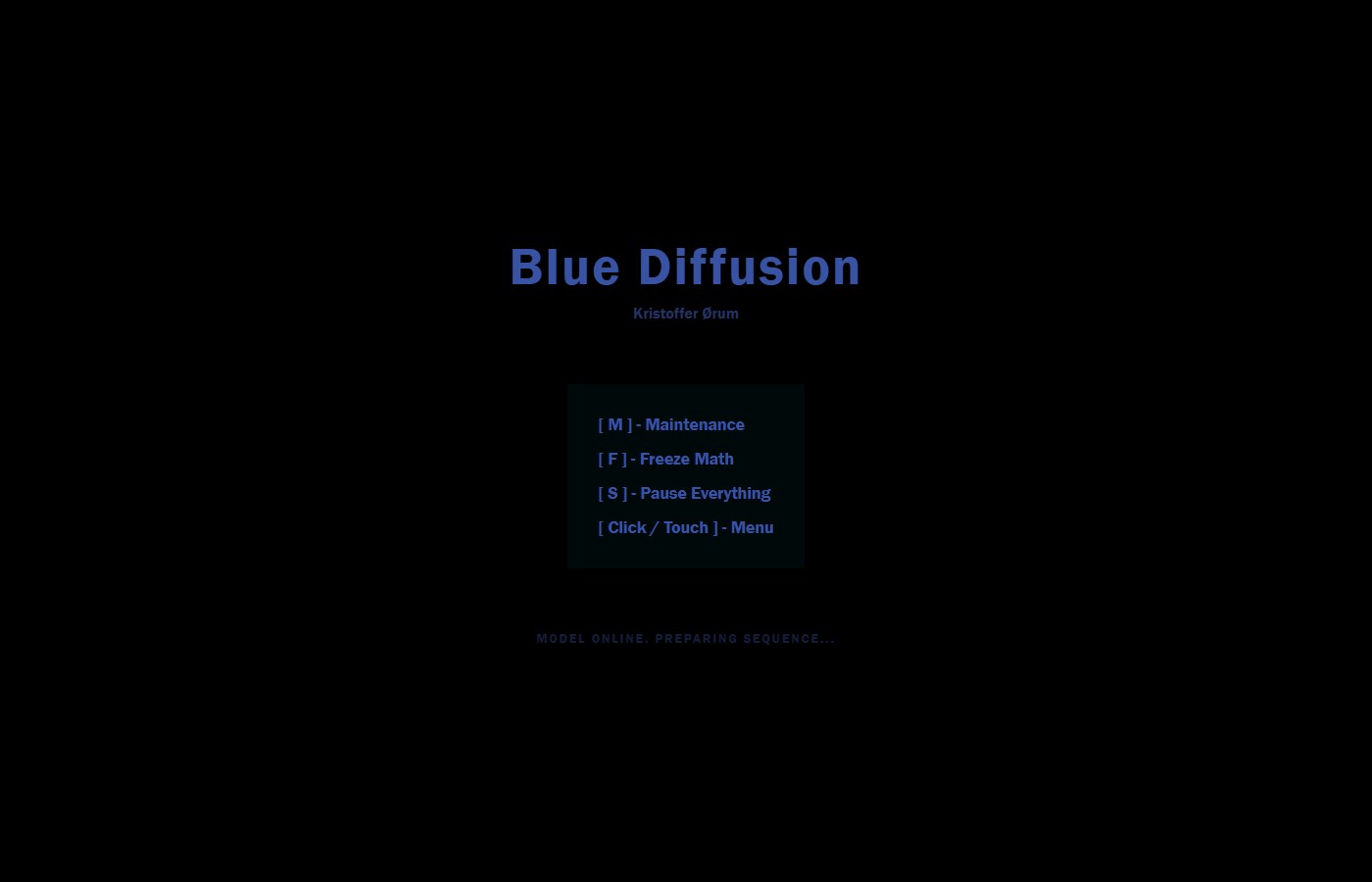
And every device runs at its own speed. That is the piece. A recent laptop resolves an image in seconds. An old phone takes minutes, and you stand and watch noise turn into something. Between images, lines of an essay come up on the screens: LIGHT THROUGH THE BEDROOM WINDOW, WHERE DOES BLUE STOP, GAPS IN DATA INTERPOLATED, A SCRIPT FULL OF ERRORS. Because the machines are out of step with each other, you read different lines depending on which screen you are standing in front of. A room of unequal hardware doing identical work, visibly unequally.
In the gallery
The devices were sourced locally, secondhand, donated, borrowed, and whatever the college already had, then set out on plinths of different heights: a large flat screen, a Dell monitor, an iMac, two laptops, a Chromebook, tablets. The cables are left where you can see them. Above the bank hangs the whole training set as a printed grid, 183 photographs of my own belongings, so that the input and the output are in the room at the same time. A QR code beside it lets a visitor join from their own phone, which then becomes one more device in the piece, resolving at its own pace.
I did not travel to Seattle. The work went over as an SD card image, a poster file and a written rider, and the gallery built it from those, which means the arrangement in these photographs is theirs. I had proposed a row of screens along a wall; what they made instead is a bank of plinths at different heights, and it is better, because the devices stand apart from each other the way their speeds do.
The Blue Light is a Promise was curated by Meghan Thréinfhir for the M. Rosetta Hunter Gallery at Seattle Central College. It opened on 28 September 2026 with the start of the school year, with a Capitol Hill Art Walk event on 8 October.
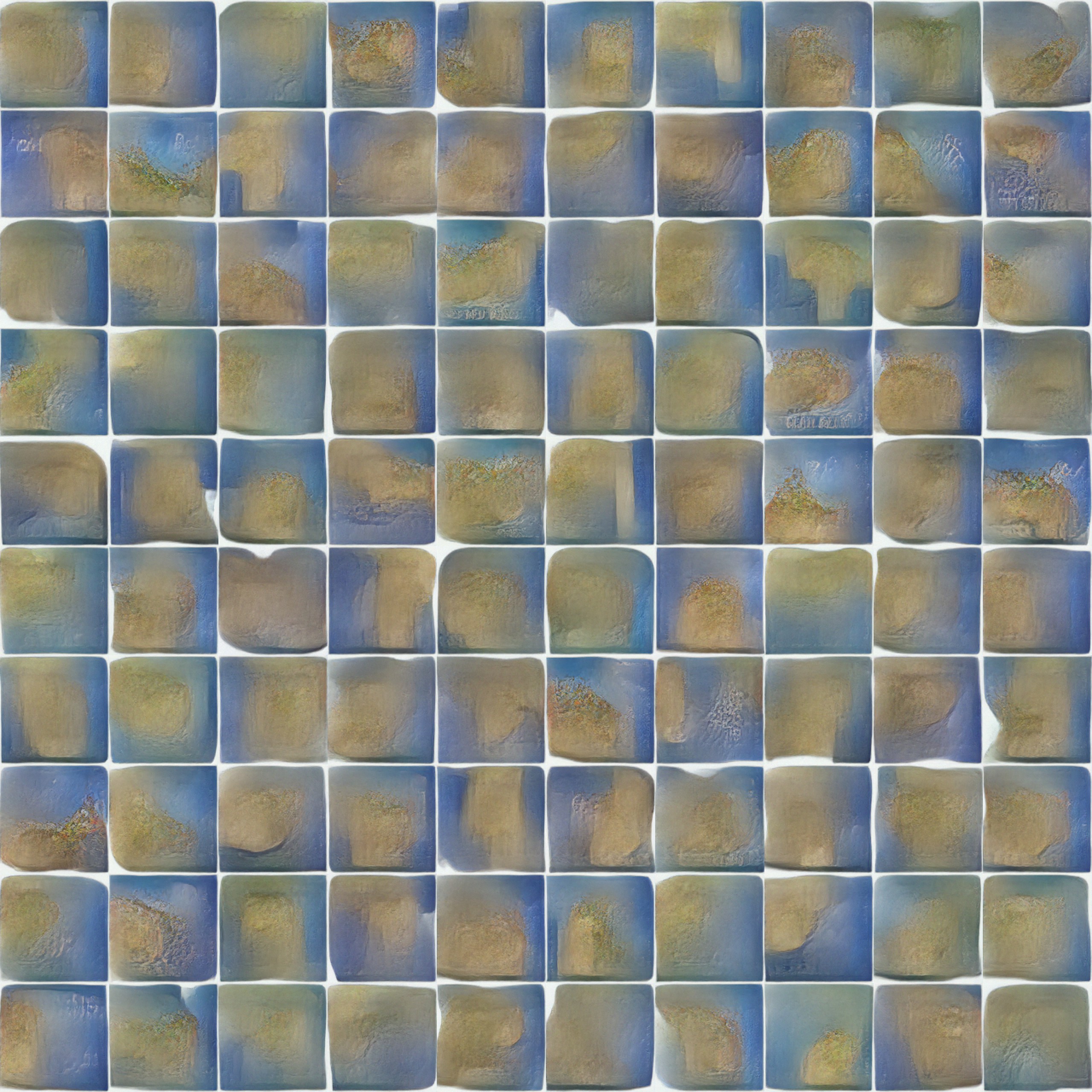
Reproduced here: the poster in full, which is the source, all 183 photographs, and every test generation from both training runs. The hundred from the model that was exhibited, and before them the hundred from the first run, which came out as khaki and blue slabs with nothing in them at all. The difference between the two sheets is the whole of what the training did.
It is still running at oerum.org/BlueDiffusion, where it will generate on your machine at whatever speed your machine manages.